Quick answer
Kling AI's current Terms of Service do not use "NSFW" as a formal policy category. They prohibit users from promoting sexually explicit material and from uploading, transmitting, distributing, storing, or otherwise making available material that is obscene, offensive, or pornographic. The Terms apply to use of the Services and define both Input and Output as Content. They also make users responsible for checking whether that Content complies with applicable law and the agreement.
The separate Community Guidelines are narrower. They govern community comments and prohibit comments containing sexually explicit material, promoting sexual services, or using sexual language or implications. Those comment rules should not be presented as the complete policy for prompts, uploads, or generated videos.
Meeting Kling AI's minimum age requirement does not create permission to make adult content. If a policy page does not clearly permit a category, do not treat silence as approval. Check the current official wording before uploading, generating, sharing, or publishing. Last verified: July 31, 2026.
"NSFW" is a search term, not the official policy label
"NSFW" is a broad internet label. It may refer to nudity, sexual content, graphic violence, or other material that a workplace or public setting would consider inappropriate. Kling AI's official pages use narrower terms instead of defining one NSFW category.
For sexual-content questions, the relevant Terms of Service wording includes "sexually explicit," "obscene," and "pornographic." The Community Guidelines add comment-specific rules for sexual services and sexual language or implications. Read each statement within the scope of its own document.
| Official page | What it covers here | Relevant wording | What it does not establish |
|---|---|---|---|
| Terms of Service | Use of Kling AI Services, user conduct, Input, Output, and published or uploaded Content | Sexually explicit, obscene, offensive, pornographic | A complete list of everything that may be allowed |
| Community Guidelines | Community comments and comment moderation | Sexually explicit material, sexual services, sexual language or implications | A complete generation policy for prompts, uploads, and Output |
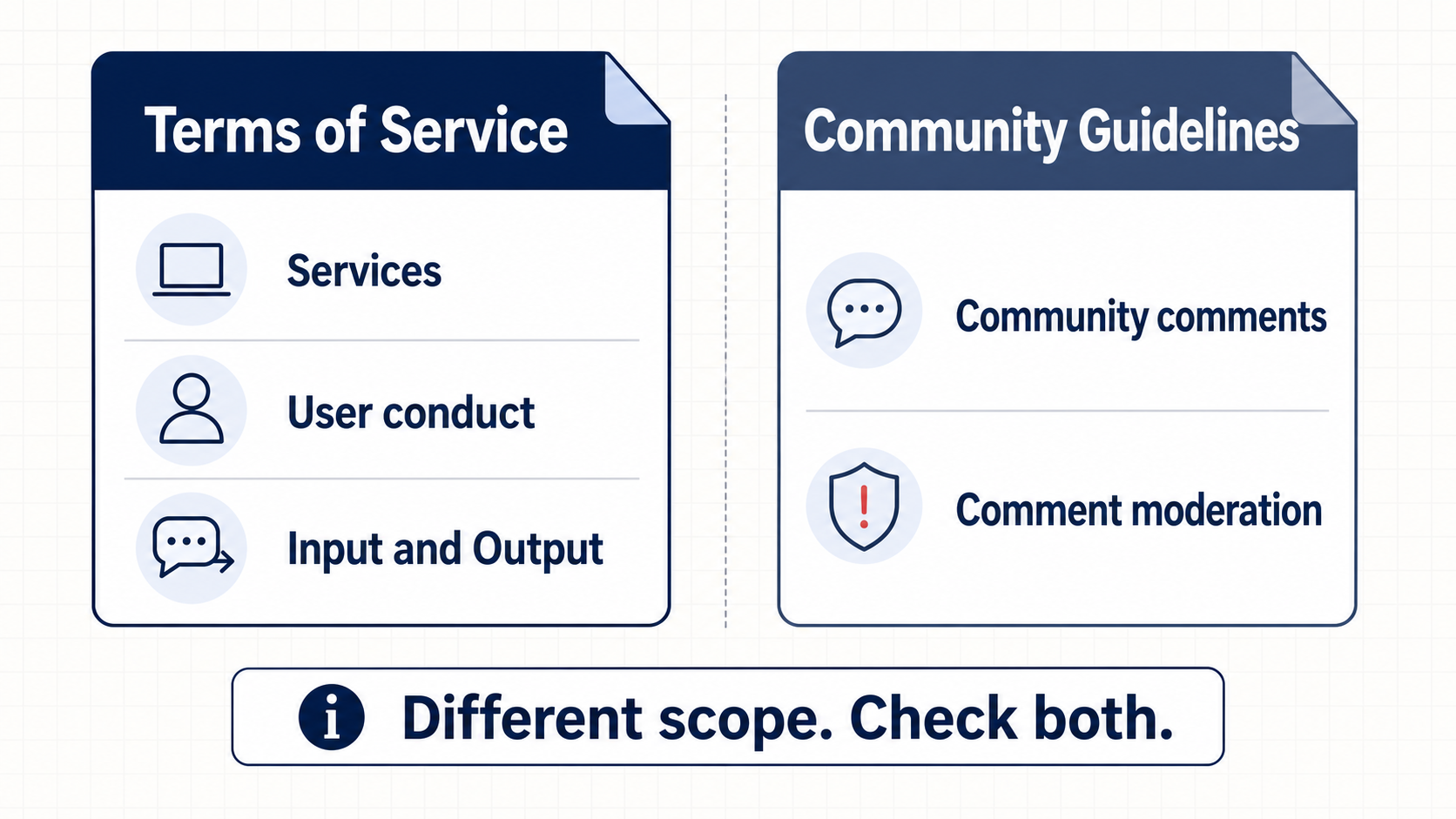
The Terms cover Services, conduct, Input, and Output. The Community Guidelines section cited here applies to comments.
What the Terms of Service prohibit
The Kling AI Terms of Service were last updated and became effective on April 21, 2026. Section 3.1 lists conduct and material that users may not use the Services to promote or make available.
For this topic, the clearest restrictions are:
- Users may not intimidate or harass another person or promote sexually explicit material.
- Users may not upload, transmit, distribute, store, or otherwise make available material that is obscene, offensive, or pornographic.
- Users may not interfere with the Services or bypass measures used to prevent or restrict access.
The last point bars bypassing access restrictions, but it does not explain how moderation works or create an exception to the content rules.
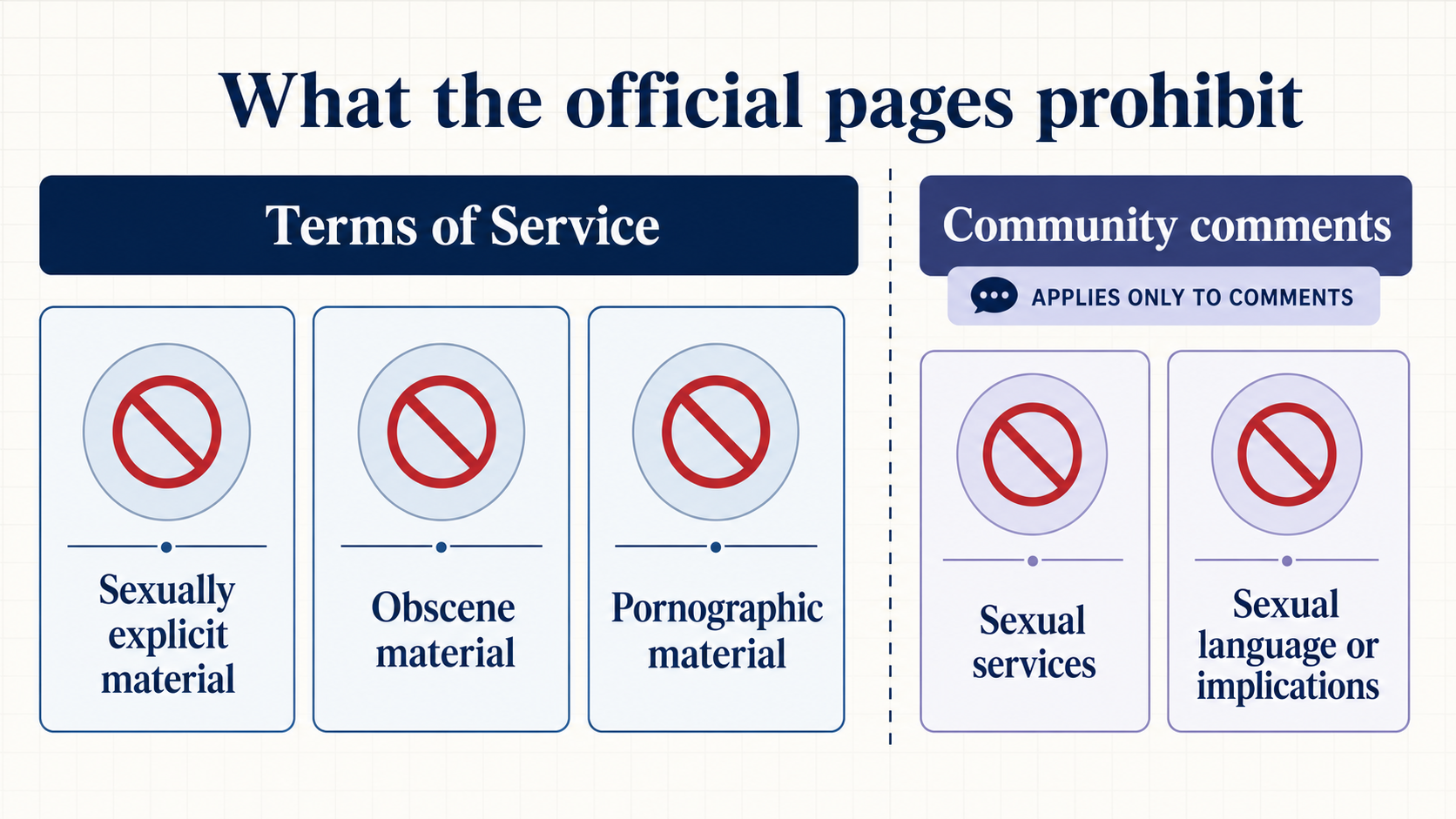
The left side summarizes Terms of Service wording. The right side is limited to community comments.
The Terms also include broader restrictions covering threats, harassment, discrimination, dangerous activities, self-harm instructions, privacy or intellectual-property violations, and material that Kling AI considers objectionable or harmful. Those categories matter in a full content review, but they should not be collapsed into a single NSFW label.
The official page does not publish a sexual-content whitelist. It does not say that content outside the three quoted terms is automatically permitted. When the wording does not answer a specific edge case, the official page has not clearly resolved that case.
What the Community Guidelines say about comments
The Kling AI Community Guidelines were released and became effective on December 12, 2024. The page says it covers community comment moderation.
Under section 2.7, comments violate the guidelines if they contain sexually explicit material, promote sexual services, or contain sexual language or implications. The same page says a violating comment may be blocked. Repeated violations may lead to suspension of commenting privileges, and severe cases may lead to an account ban.
These statements apply to comments. They do not replace the Terms of Service rules for the Services, Input, Output, or other Content. A comment rule may be useful evidence about community moderation, but it cannot support claims about every prompt or generated result.
Age eligibility is not permission for adult content
The Terms say that anyone under 13, or under another minimum age set by local law, may not use the Services. Someone who has reached that minimum age but remains under the age of majority may only use and register for an account through a parent or legal guardian's representation. Local law and particular features may impose further restrictions.
Those provisions answer who may use the Services and under what conditions. They do not create an adult-content exception. Being old enough to hold an account does not override the prohibited-conduct and prohibited-content sections.
Users are responsible for Input and Output
The Terms define uploaded text, images, video, audio, and other submitted material as "Input." Material generated in response is "Output." Together, Input and Output are "Content."
Section 4.2 says users are responsible for that Content, including ensuring that it does not violate applicable law or the agreement. Section 3.2 also says users should evaluate the accuracy and appropriateness of Output for their use case, which may include human review before using or sharing it.
Use this four-step check:
- Review the prompt and every uploaded asset before submission.
- Review the generated result rather than assuming successful generation means permission to use it.
- Check the result against applicable law, the current Terms, and the rules for the place where it will be published.
- Publish only after the review is complete.
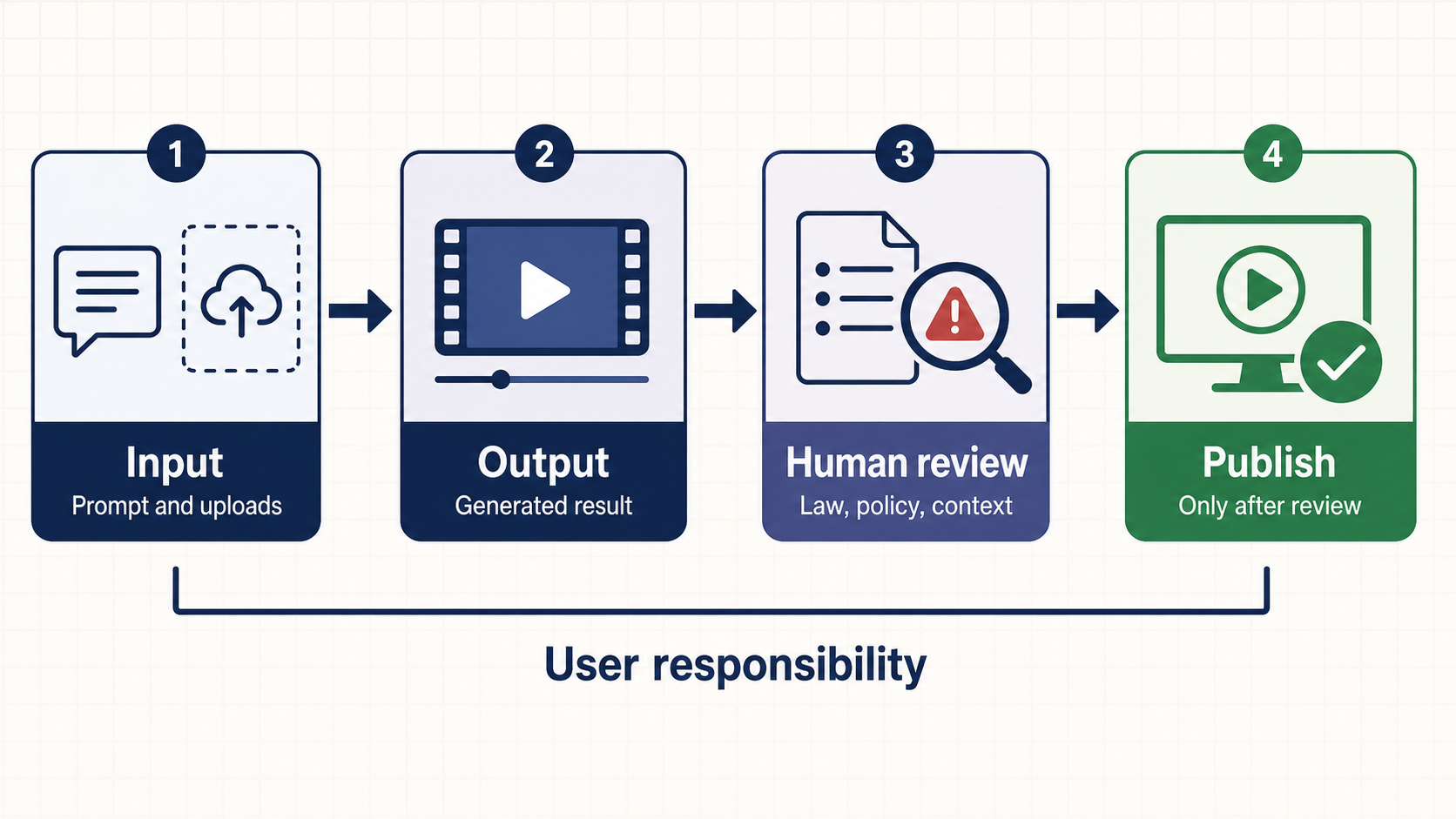
Generation is one step in the workflow. Users remain responsible for reviewing Input and Output before publication.
Possible consequences of a violation
The Terms give Kling AI several enforcement options. Depending on the provision and circumstances, these may include:
- removing Content or refusing to display it;
- refusing the Service;
- suspending, blocking, or deleting an account or access to the Services;
- reporting suspected legal violations to relevant authorities.
The Terms also say that authorization to access the Services may terminate immediately if a user violates the agreement, does not comply with applicable law, or uses the Services in a way that could cause risk or harm.
The Community Guidelines describe a separate comment-moderation sequence: a violating comment may be blocked, frequent violations may suspend commenting privileges, and severe cases may lead to an account ban.
These are possible measures stated in the official pages. They are not a prediction of how Kling AI will decide a particular case.
How to check the latest policy
Policy wording can change. Use this short check before relying on an older article or screenshot:
- Open the current Terms of Service and Community Guidelines on an official Kling AI domain.
- Read the last-updated, release, and effective dates shown on each page.
- Confirm whether the section applies to the Services, Input and Output, published Content, or only community comments.
- Read the current wording around the relevant clause. Do not rely on a search-result excerpt alone.
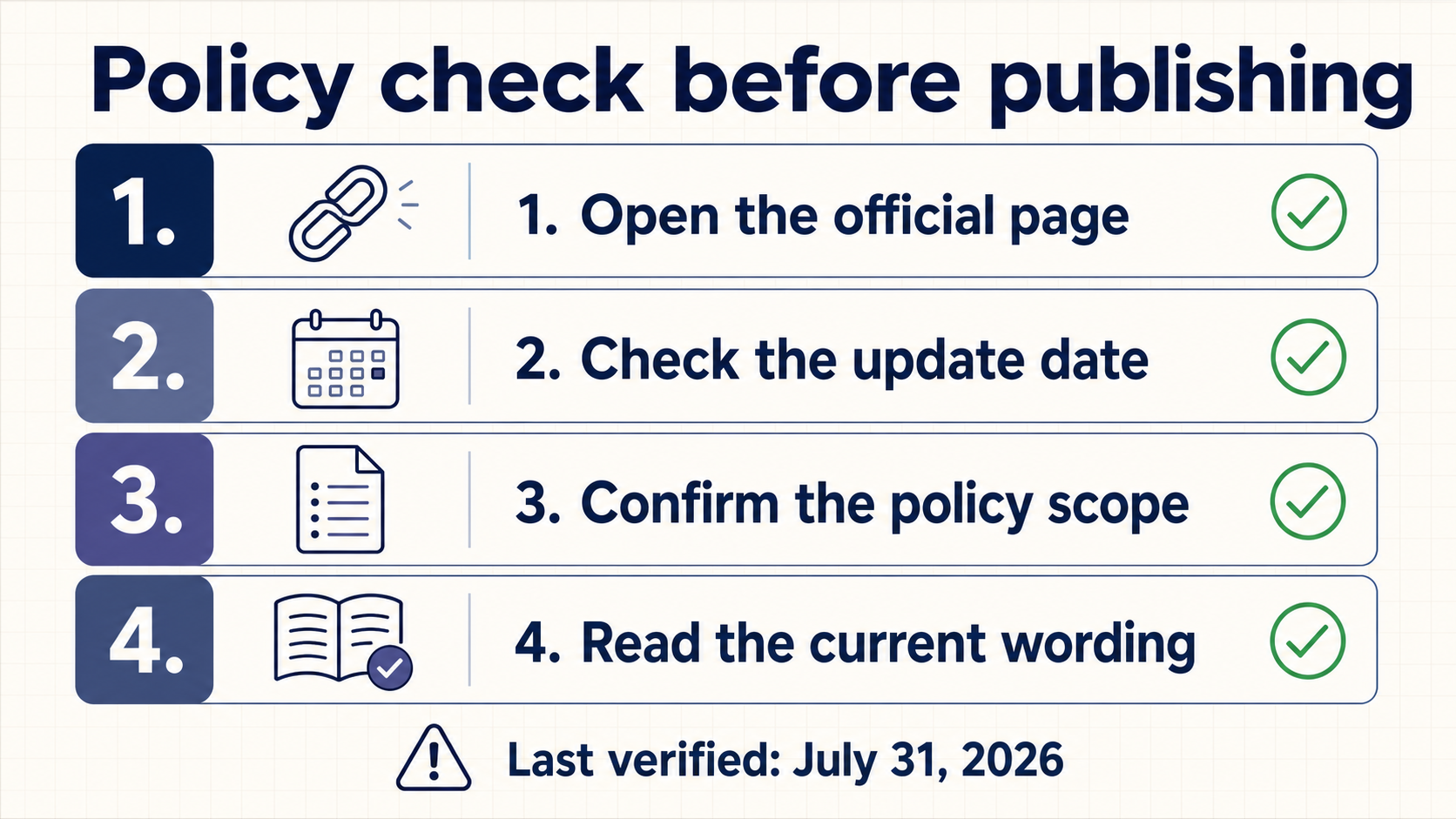
Open the official page, check its date, confirm its scope, and read the current clause.
KlingVideo is an independent service and is not the official Kling AI website or team. Review the KlingVideo Terms of Service and Privacy Policy as well. Kling AI's official rules and KlingVideo's own rules may not be identical.
FAQ
Does Kling AI allow NSFW content?
The official Terms do not define one "NSFW" category. They prohibit promoting sexually explicit material and prohibit making obscene, offensive, or pornographic material available through the Services. The official pages do not provide a whitelist saying which other sexual-content categories are allowed.
Does being over 18 make sexual content permissible?
No such exception appears in the cited Terms. Age eligibility determines who may use the Services and when a parent or guardian must represent a minor. It does not override the prohibited-content rules.
Do the Community Guidelines apply to generated videos?
The cited Community Guidelines page is specifically about community comments and comment moderation. Use the Terms of Service for broader rules covering the Services, Input, Output, and Content.
Who is responsible for a prompt, upload, or generated result?
The Terms say users are responsible for Input and Output and must ensure that Content complies with applicable law and the agreement. They also call for evaluating Output for the specific use case, which may include human review before use or sharing.
What can happen after a policy violation?
Possible actions stated in the Terms include Content removal or refusal to display it, Service refusal, and account or access suspension, blocking, deletion, or termination. The exact response depends on the applicable provision and circumstances.
How often should I recheck the policy?
Check it before a sensitive project and again before publication if time has passed. Confirm the page date and read the current clause. Policy pages can be updated after this article's verification date.
Review the rules before generating
If your project fits the official rules and the rules of the service you use, review the current workflow on the Kling 3.0 model page. New users can also read How to Use Kling AI Video Generator before creating a first video.
This article summarizes public policy text for general information. It is not legal advice.
Sources and methodology
- Kling AI Terms of Service, last updated and effective April 21, 2026; accessed July 31, 2026. Used for eligibility, prohibited conduct and material, Input and Output responsibility, human review, enforcement, and termination.
- Kling AI Community Guidelines, released and effective December 12, 2024; accessed July 31, 2026. Used only for community comment rules and comment-moderation consequences.
- KlingVideo Terms of Service and Privacy Policy, accessed July 31, 2026. Linked to distinguish this independent service's rules from Kling AI's official rules.
- Method: direct review of the current official pages and their displayed dates. No filter testing, boundary testing, or community reports were used.
- Last verified: July 31, 2026.